
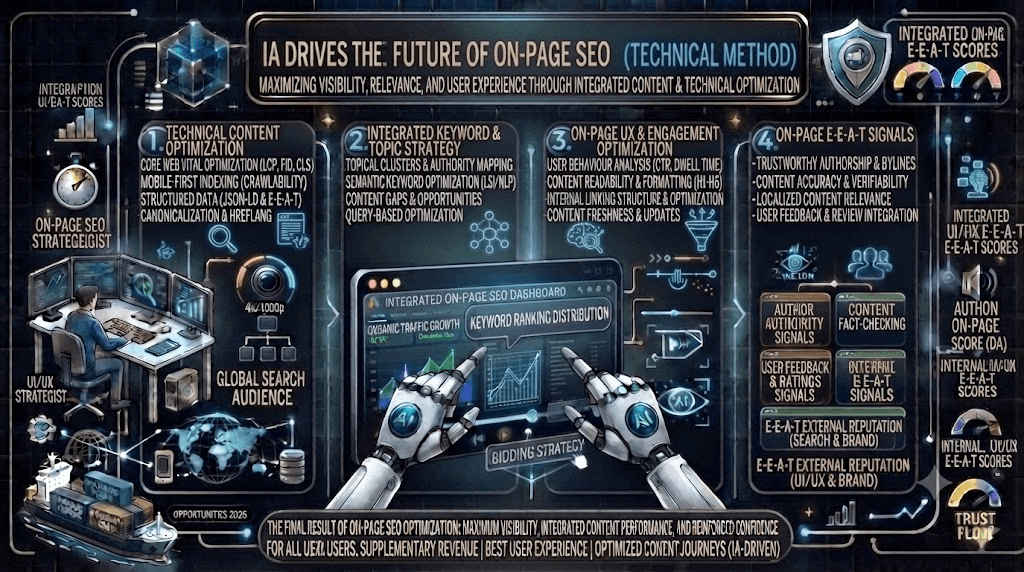
Petit Le Guide du Référencement On-Page (SEO)
Le SEO On-Page (ou “sur-page”) désigne l’ensemble des optimisations que tu peux effectuer directement à l’intérieur de ton site web pour améliorer sa position dans les résultats de recherche. Contrairement au SEO Off-Page (backlinks), ici, tu as le contrôle total.
1. La Structure Technique de Base
Avant même de parler de contenu, le squelette de ta page doit être solide.
- L’URL de la page : Elle doit être courte, descriptive et contenir ton mot-clé principal.
- Exemple :
monsite.com/seo-on-pageest bien mieux quemonsite.com/p=123. - La Balise Title (Titre SEO) : C’est le titre bleu qui apparaît dans Google. Il doit faire environ 50 à 60 caractères et placer le mot-clé au début.
- La Meta Description : Elle n’influence pas directement le classement, mais elle booste le CTR (taux de clic). Sois accrocheur !
- Le Protocole HTTPS : La sécurité est un critère de classement officiel. Pas de cadenas, pas de chocolat (ni de trafic).
2. L’Optimisation du Contenu
Le contenu est roi, mais un roi qui doit être bien habillé.
La Hiérarchie des Titres (Hn)
Organise ton texte avec des balises HTML pour aider les robots à comprendre le sujet :
- H1 : Un seul par page (le titre principal).
- H2 : Les sections majeures.
- H3 : Les sous-sections.
La Richesse Sémantique
Google ne cherche plus seulement des mots-clés exacts, il cherche du contexte.
- Utilise des synonymes.
- Réponds aux questions secondaires des utilisateurs.
- Vise une longueur de texte qui traite le sujet en profondeur (souvent plus de 1000 mots pour les sujets complexes).
3. Le SEO pour les Images
Les robots de Google ne “voient” pas les images comme nous. Ils lisent le code.
- Le Texte Alternatif (Alt Text) : Décris l’image pour les malvoyants et les robots. C’est ici que tu places tes mots-clés de manière naturelle.
- Le Poids des Images : Des images trop lourdes ralentissent ton site. Utilise des formats comme le WebP.
- Le Nom du Fichier : Renomme
IMG_001.jpgenguide-seo-on-page.jpg.
4. L’Expérience Utilisateur (UX)
Google privilégie les sites qui offrent une navigation agréable.
- Vitesse de Chargement : Si ton site met plus de 3 secondes à charger, tu perds 50% de tes visiteurs.
- Mobile Friendly : Ton site doit être parfait sur smartphone. C’est l’indexation « Mobile-First ».
- Core Web Vitals : Surveille la stabilité visuelle et l’interactivité de tes pages.