
SEO and AI: optimize your SEO for ChatGPT
This new discipline is known as GEO (Generative Engine Optimization) or AEO (Answer Engine Optimization). Optimizing a site for ChatGPT (OpenAI) or Google AI Overviews follows rules that differ significantly from traditional SEO.
Today, AI does not merely look for keywords; it seeks structured, reliable answers to incorporate into its text-based summaries.
Here is the roadmap for making your site ChatGPT’s preferred source:
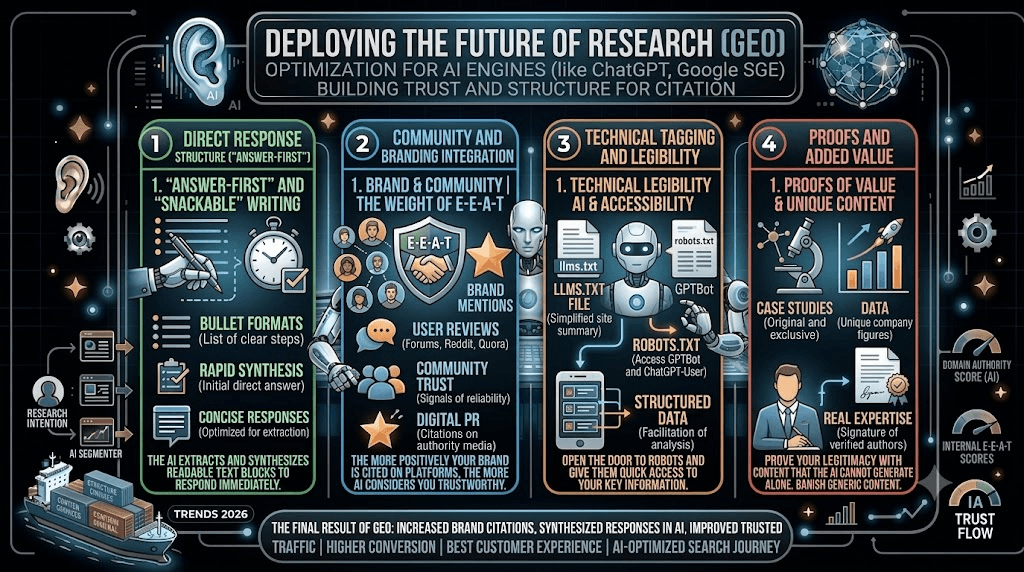
1. Content structure: Writing “Answer-First”
AI models use the RAG (Retrieval-Augmented Generation) mechanism. They scour the web for easily extractable text blocks to answer the user.
- The “snackable” format: Provide the direct answer in the very first lines of your article.
- Use lists and tables: AIs love to synthesize information. A comparison table or a clear bulleted list is three times more likely to be cited by ChatGPT.
- Adopt a Q&A format: Structure your headings (H2, H3) as direct questions asked by users (e.g., “How do I set up Shopify SEO?”), followed immediately by the answer.
2. Brand Mentioning (The impact of reviews and forums)
When recommending a product or service, ChatGPT does not rely solely on hyperlinks (backlinks); it analyzes a brand’s overall reputation on the web.
- Be present where AI trains: ChatGPT extensively scans community platforms (Reddit, Quora) and review sites (Trustpilot, Amazon, Google Business Profile). The more your brand is mentioned positively there, the more the AI will view you as a reliable authority.
- Digital PR: Securing text-based mentions (even without a clickable link) in major, authoritative media outlets boosts your “weight” in the AI’s knowledge base.